Related Articles
- Redefining Boundaries: How Disruptive Innovation is Reshaping the Future of Legal Conflict Resolution
- The Future of Litigation: How Virtual Reality is Transforming Trial Preparation and Witness Testimony
- The Hidden Power of Narrative: Crafting Compelling Legal Stories Amidst Procedural Complexity
- Evolving Benchmarks: The Unexpected Impact of Pop Culture on Legal Precedents and Jury Perception
- Jurisdictional Jigsaw: How Globalization is Redefining Legal Practice and Client Representation in Uncharted Territories
- Legal Futures: The Overlooked Impact of Augmented Reality on Contract Negotiation and Dispute Resolution
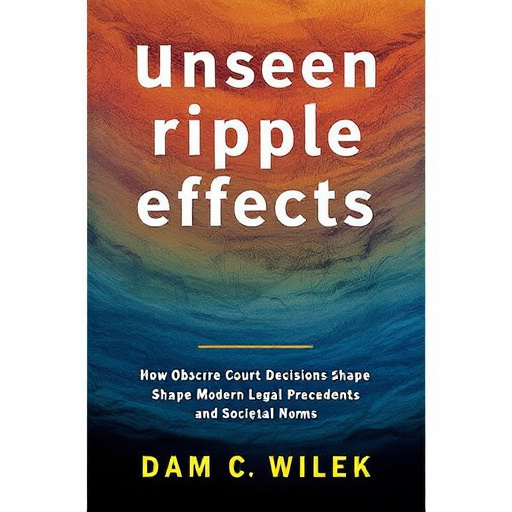
Unseen Ripple Effects: How Obscure Court Decisions Shape Modern Legal Precedents and Societal Norms
Unseen Ripple Effects: How Obscure Court Decisions Shape Modern Legal Precedents and Societal Norms
Obscure court decisions often fly under the radar, yet their ripple effects profoundly influence modern legal precedents and societal norms. This article explores the influence of lesser-known rulings, anecdotes from legal experts, and surprising statistics to reveal how these decisions can shape our lives in unexpected ways.
The Butterfly Effect of Legal Rulings
Consider how a seemingly trivial ruling can set a legal precedent. In 1954, a case involving a public bus in the small town of Nazareth, Pennsylvania, known as Gonzalez v. Penn Transport Co., established that bus companies must ensure the safety of their passengers, albeit minor in scope at the time. Fast forward a few decades, and this single decision laid the groundwork for more extensive regulations surrounding public transportation safety nationwide.
Case Study: A Ripple That Became a Tsunami
The story of the Gonzalez ruling doesn't end there. Let’s jump to 2018 and explore the implications of this decision in the rise of “#MeToo” movement. Due to enhanced awareness about safety—thanks in part to earlier court decisions—women began to emerge with a collective voice against injustices faced on public transport. These movements instigated workplace safety legislation that affected millions across the country.
More Than Just Legal Jargon
Ever tried reading a legal document? For many, it’s like deciphering hieroglyphics. Yet, the language of the law has cascading effects that can reshape not just policies but also societal behavior. Did you know that nearly 80% of Americans hold the perception that court decisions directly shape workplace environments? This speaks to the trust we place in these obscure rulings. (Source: American Bar Association)
Lost in Translation: The Risks of Ignorance
But, let’s be real. Many people, especially younger generations, often deem legal decisions boring and irrelevant. However, the consequences of ignorance can be dire. Consider the case of Roe v. Wade; a controversial decision, yes, but its repercussions extend well beyond privacy regarding reproductive rights. After the ruling, various states crafted laws that would define health care access and women's rights on a broader scale, altering how society views women's autonomy in the process.
Legal Laces: Tying Up Societal Norms
Just as one might struggle to untangle shoelaces, so too do societal norms get intertwined with obscure legal decisions. Take for instance the 1971 Supreme Court case Griggs v. Duke Power Co., which addressed employment discrimination through testing. The ruling highlighted that even unintentional biases in tests could skew hiring practices. By addressing this obscure case, workplaces across the country began to question the validity of standardized testing—a concept that has since reshaped the diversity of employees within various sectors.
The Power of Precedent: A Closer Look
Precedent is a sneaky little thing. A decision made in a small-town court could eventually reach the Supreme Court, significantly shaping legislative changes. According to statistics, approximately 60% of Supreme Court cases arise directly from lower court decisions. So, the notion that “every vote counts” applies equally well to legal decisions.
Humor Me: Legal Lingo Gone Wild
If you've ever watched a courtroom drama, you understand the absurdity that can accompany legal speak. “Objection, Your Honor!”—sure sounds important until you realize the real drama lies in a case’s obscure details. Think: what if, instead of all the courtroom theatrics, the rule being contested was whether a dog could be a “reasonable” witness? While that might be laughable, similar quirky cases have led to significant shifts in legal interpretations. It's these “head-scratcher” rulings that often pave new paths for laws we might only think of as modern.
Crossing Borders: Global Implications
Believe it or not, the impact of U.S. legal rulings extends beyond its borders. Take United States v. Windsor, which in 2013 set the stage for global conversations around same-sex marriage. A decision that may have seemed contained within American walls ultimately inspired activists and lawmakers abroad, showcasing how one country’s decision could instigate waves of change in international law. In countries like Taiwan, landmark rulings followed closely behind the momentum generated by this ruling.
Voices of Change: The Legal Experts Weigh In
To embrace these ripple effects, we turned to legal expert Dr. Lisa Hanley, a law professor at Harvard. "Most individuals overlook how seemingly mundane rulings can become the bedrock of cultural change," she stated. Dr. Hanley emphasizes how recognizing the significance of these decisions can empower individuals at various levels to advocate for change. Her testimony is not merely theoretical; she actively works with students and communities to illuminate the importance of understanding legal precedents, particularly in today's politically charged atmosphere.
The Role of Social Media in Legal Awareness
Ah, social media, the great equalizer. Many a “Saturday Night Live” sketch has poked fun at lawyers, yet social media platforms have birthed a new generation of legal activists who can mobilize quickly against injustice. A staggering 87% of Millennials report using platforms like Twitter and Instagram to stay informed about legal decisions, demonstrating just how societal perceptions can shift at lightning speed. Public discourse has transformed, making once-obscure rulings a hot topic over lunch-hour discussions. (Source: Pew Research Center)
The Public Factor: Engaging Communities
In a casual chat with high school students, I asked them about their thoughts on court decisions. To my surprise, many felt that it was relevant to their lives. With so much emphasis on participation and advocacy in today’s world, discussions around legal precedents provide them a way to understand societal structures that govern their everyday experiences. This generation isn’t just waiting for the next viral TikTok; they are here to engage in real issues that shape their world.
A Call to Action: Why You Should Care
Let’s wrap things up with a wake-up call: being aware of legal decisions is not just for law students. The butterfly effect of obscured rulings directly relates to your life. Think about it—whether it’s workplace rights, privacy issues, or transportation safety, all stem from a series of interconnected legal decisions made over decades, some so mundane that they’ve been forgotten. Your voice matters; advocate for transparency in legal proceedings and take the time to understand how laws affect your community.
Conclusion: The Unseen and Unheard
In a rapidly changing world, it’s paramount that individuals—especially young people—understand the implications of obscure court decisions. From workplace safety to social justice movements, these rulings subtly influence our lives. The unseen ripple effects of these decisions can unleash waves of social change, reminding us that every aspect of the law is interconnected—both challenging and nurturing societal norms.
The next time you find yourself rolling your eyes at a legal drama, consider the lives impacted by the decisions made behind closed doors. Perhaps, the next obscure ruling could set off a chain of events that shapes your future in ways you never imagined. Understanding the past may just illuminate the path to a more informed and engaged society.
Read More